
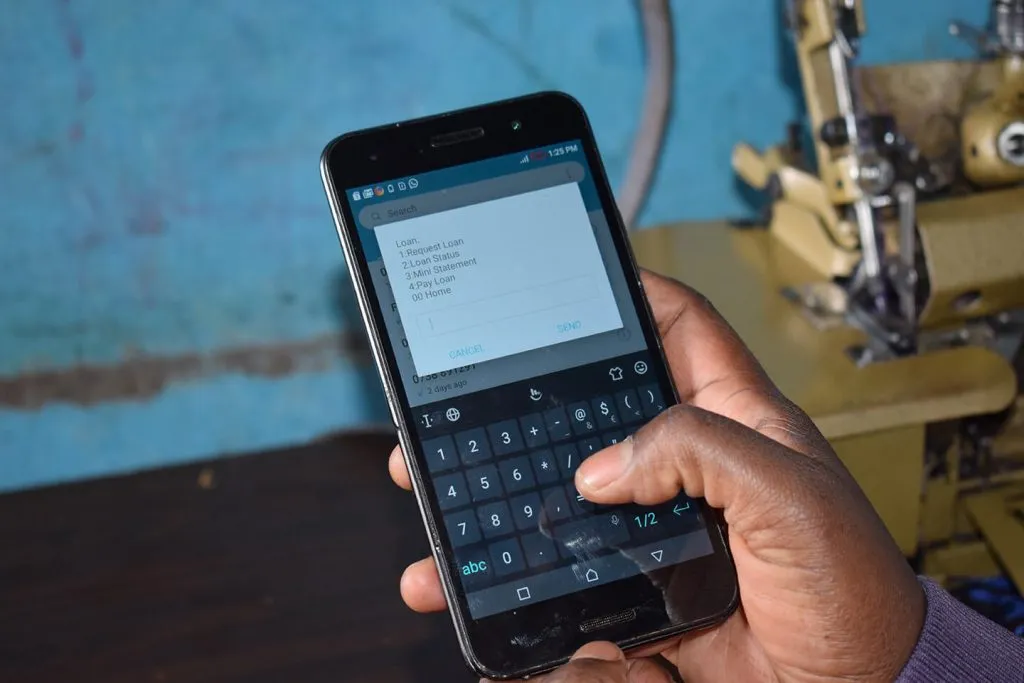
Every fintech pitch deck opens with an app screenshot. But look at what actually moves money in Kenya, from M-Pesa and bank balance checks to most SACCO activity, and it runs on USSD, not an app. This guide explains why USSD still matters for Kenyan fintech in 2026, where it wins, and how to build a USSD service customers actually finish.
New to USSD? Read what a USSD code is and how it works.
Why USSD still wins in Kenya
- It works on every phone. Feature phones are still common, and many smartphone owners are often without data. USSD needs only network coverage.
- Nothing to install. No app store, no download, no storage space and no updates. Dialling a code is something every M-Pesa user already knows.
- It is instant and interactive. A customer can check a limit, apply and confirm in under a minute.
- It is trusted. People are used to doing money on USSD because of M-Pesa, which lowers the barrier for a new financial product.
For a fintech chasing reach, that is the difference between serving part of the market and serving all of it.
Where fintechs use USSD
| Use | What the customer does |
|---|---|
| Digital lending | Checks a loan limit, applies, receives the loan on M-Pesa, repays |
| SACCO services | Checks savings and loan balances, requests a mini-statement or a loan |
| Micro-insurance | Signs up, pays premiums, checks cover, starts a claim |
| Savings and investment | Deposits, checks balances, withdraws |
| Agent and field banking | Records transactions where data connections are unreliable |
| Payments | Pays bills, fees or merchants with an M-Pesa prompt |
App or USSD? Run both
The best fintechs do not choose. The app serves smartphone users who want richer features; USSD serves everyone else, and in many products "everyone else" is the larger group. Both should read and write the same live backend, so a loan applied for on USSD shows up correctly in the app, and the other way round.
How to build a USSD service customers finish
- Keep menus short. Sessions time out. Put the most-used action first and keep every path to three or four steps.
- Use live data. Balances and limits must come straight from your core system, never from a stale copy.
- Write for small screens. Short labels, numbered options, and no screen longer than the network allows.
- Confirm by SMS. A USSD session disappears when it ends, so send an SMS receipt for every transaction.
- Test on every network. Safaricom, Airtel and Telkom behave differently, so test every path on real phones on each.
- Watch the drop-off. Session analytics show which step customers abandon, so you know what to simplify.
Shared or dedicated USSD code?
Start on a shared code (an extension such as *XXX*123#): free setup, a monthly fee and a fast launch. Move to a dedicated code (*123#) when the product has proven demand and you want a short code customers remember. See USSD code prices and options in Kenya.
Related guides: USSD code cost in Kenya · How to apply for a USSD code
Frequently asked questions
Is USSD still relevant in Kenya in 2026?
Yes. USSD works on every phone without data, and M-Pesa, banks, SACCOs and lenders still run core services on it. For reach, it remains the most inclusive channel.
How long does it take to launch a USSD service?
On a shared code, a service can go live as soon as the menu is built and tested, often within days. A dedicated code takes longer because each network has to approve and set it up.
Can USSD connect to M-Pesa?
Yes. A USSD service can trigger M-Pesa payments and disbursements through your backend, then confirm the result by SMS.
Who pays for USSD sessions?
On a pre-paid code the customer's airtime pays for the session; on a post-paid code the business pays and customers use it free.
Want USSD built into your product? Talk to us about USSD in Kenya.


